14 Sewing Measurements Chart Free Printable
Ever stare at a pattern, tape measure in hand, feeling like you’re about to wrestle an octopus? We totally get it.
Measuring for sewing can feel like a secret code sometimes.
No worries, we’ve got your back with some super handy measurement charts you can snag for free. These printables are about to make your sewing projects way less stressful and way more accurate.
Get ready to ditch the guesswork and embrace precision.
1. Body Measurements Chart
- Best For: Custom fitting, pattern adjustments
- Vibe: Precision guru
- Why it works: Ensures clothes actually fit you and not some generic mannequin.
This chart walks you through all the essential spots like your bust, waist, hips, and inseam. Always take these measurements wearing only your undergarments for the most accurate results. It’s like a personalized blueprint for your wardrobe.
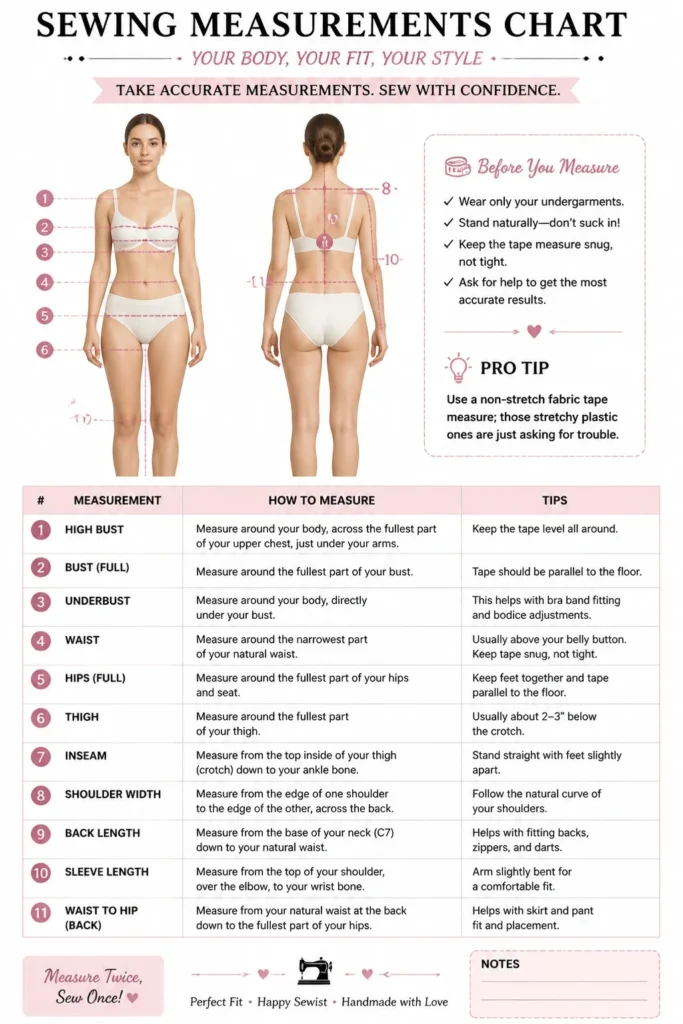
Pro Tip: Use a non-stretch fabric tape measure; those stretchy plastic ones are just asking for trouble.
2. Pattern Adjustment Guide
- Best For: Novice pattern hackers
- Vibe: Problem solver
- Why it works: Helps you easily modify store-bought patterns for a better, custom fit.
This guide tackles common tweaks like lengthening or shortening a bodice or adjusting for broad shoulders. It even shows you how to handle a full bust adjustment (FBA) without losing your mind. Say goodbye to ill-fitting shoulders or gaping necklines.
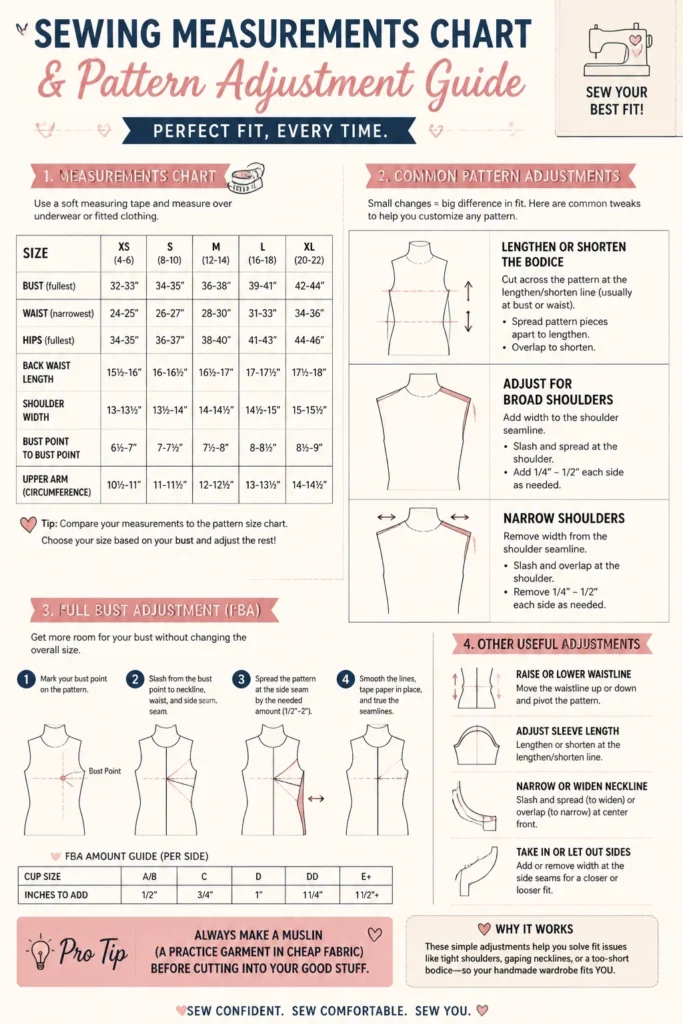
Pro Tip: Always make a muslin (a practice garment in cheap fabric) before cutting into your good stuff.
3. Seam Allowance Reference
- Best For: Every single project
- Vibe: Stitch line clarity
- Why it works: Keeps your seams consistent and professional-looking every single time.
Do you know if it’s 5/8 inch or 1/2 inch? This chart clarifies common seam allowances for different patterns. Commercial patterns often use 5/8 inch (1.5 cm), while indie patterns might go with 1/2 inch (1.2 cm).
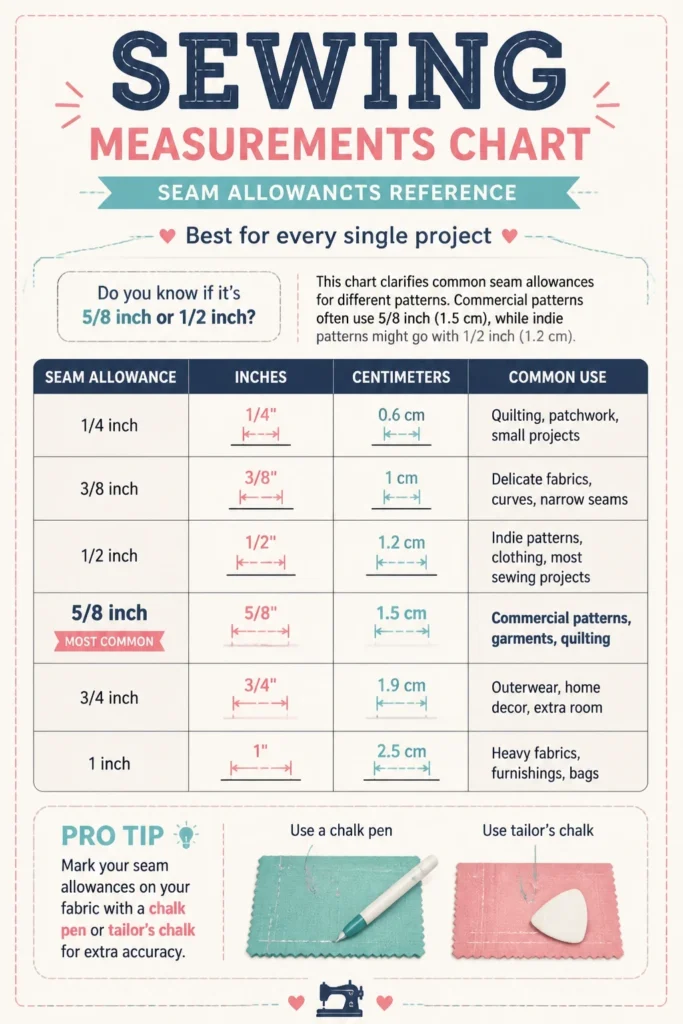
Pro Tip: Mark your seam allowances on your fabric with a chalk pen or tailor’s chalk for extra accuracy.
4. Fabric Width Conversion Chart
- Best For: Fabric shopping, pattern cutting
- Vibe: Material maestro
- Why it works: Helps you calculate yardage needed for different fabric widths, avoiding costly mistakes.
Patterns often specify yardage for one fabric width, usually 45 inches. This chart helps you convert that for 60-inch wide fabrics or vice versa. No more guessing if you have enough of that gorgeous linen or pricey silk.
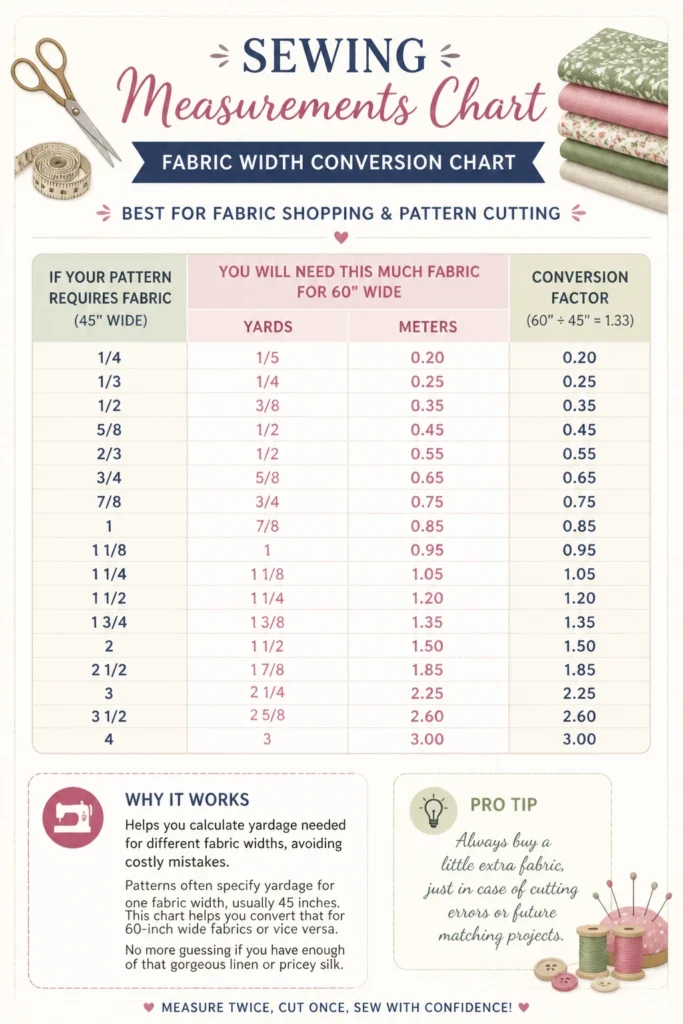
Pro Tip: Always buy a little extra fabric, just in case of cutting errors or future matching projects.
5. Buttonhole Size Guide
- Best For: Garment finishing
- Vibe: Detail-oriented
- Why it works: Ensures your buttons slide smoothly without being too loose or too tight.
Getting buttonholes just right is a game-changer for a professional finish. This guide shows you how to match button diameter to buttonhole length, typically adding 1/8 inch for ease. Perfect for that blouse or cardigan.
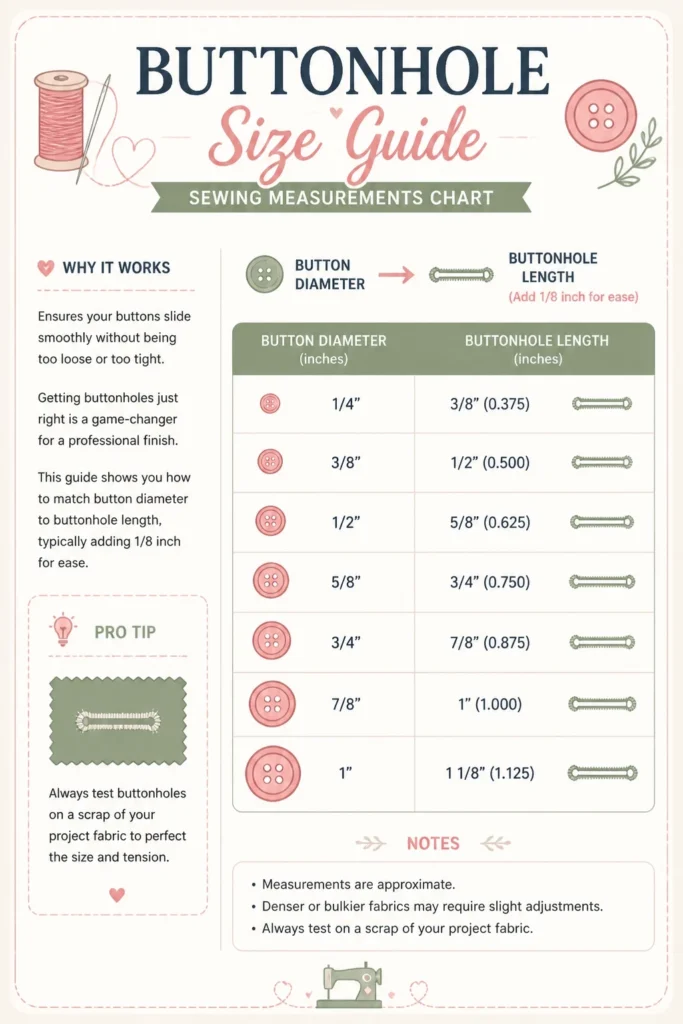
Pro Tip: Always test buttonholes on a scrap of your project fabric to perfect the size and tension.
6. Zipper Length Reference
- Best For: Zipper installation
- Vibe: Smooth operator
- Why it works: Helps you pick the right zipper length for your opening, saving you a trip back to the store.
From invisible zippers for a dress to heavy-duty metal ones for jeans, zippers come in all sorts of lengths. This chart helps you determine the ideal length based on your project’s opening. Standard lengths range from 7 inches to 22 inches.
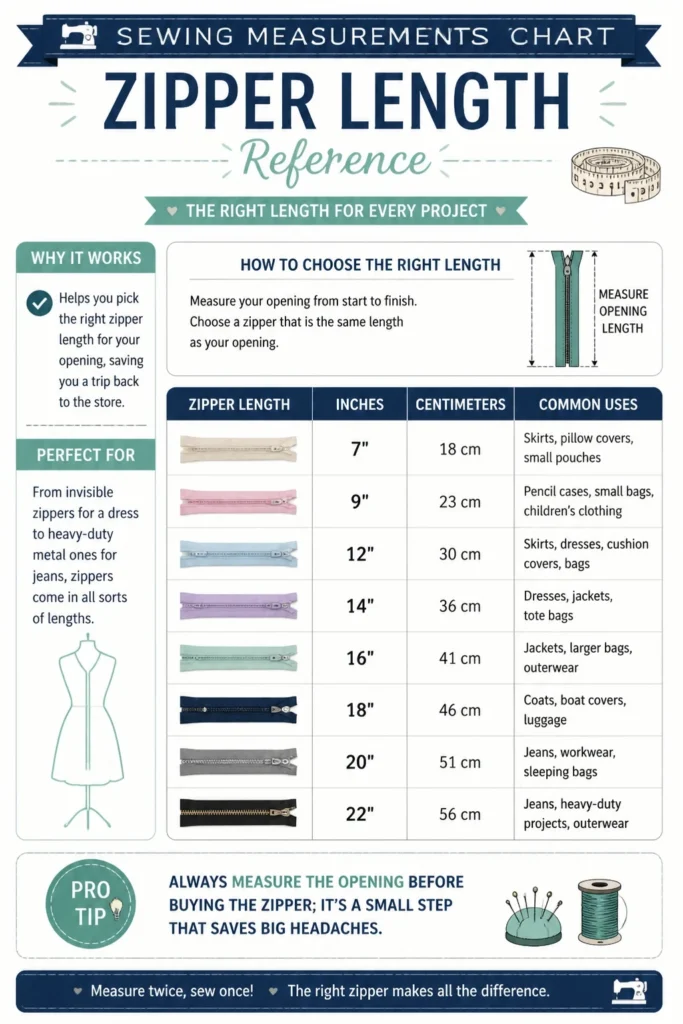
Pro Tip: Always measure the opening before buying the zipper; it’s a small step that saves big headaches.
7. Needle Size & Fabric Matcher
- Best For: Preventing skipped stitches and fabric damage
- Vibe: Thread whisperer
- Why it works: Guarantees you use the correct needle for your specific fabric type.
Using the wrong needle can cause skipped stitches, pulled threads, or even holes in your fabric. This chart tells you which needle, like a Universal 80/12 for cotton or a Stretch 75/11 for knits, works best. Denim 90/14 is your friend for heavy fabrics.
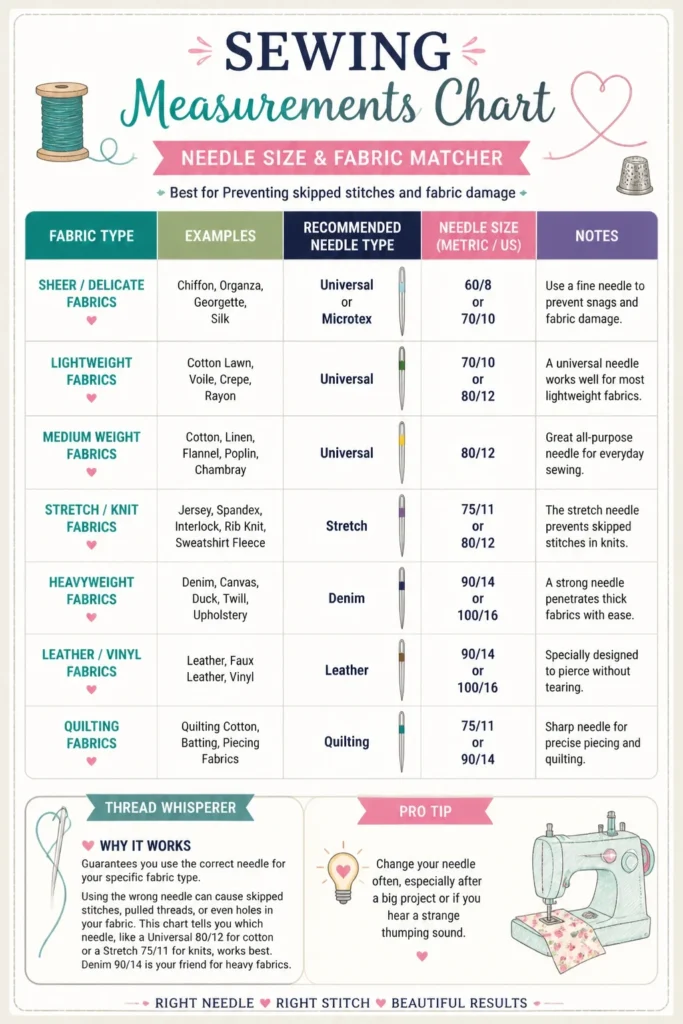
Pro Tip: Change your needle often, especially after a big project or if you hear a strange thumping sound.
8. Thread Weight & Type Guide
- Best For: Durable projects
- Vibe: Stitch strength
- Why it works: Ensures your thread matches your fabric and project needs for lasting wear.
Not all threads are created equal. This guide helps you choose the right thread, whether it’s all-purpose polyester for most garments or cotton thread for natural fibers. You might need heavy-duty thread for upholstery or canvas.
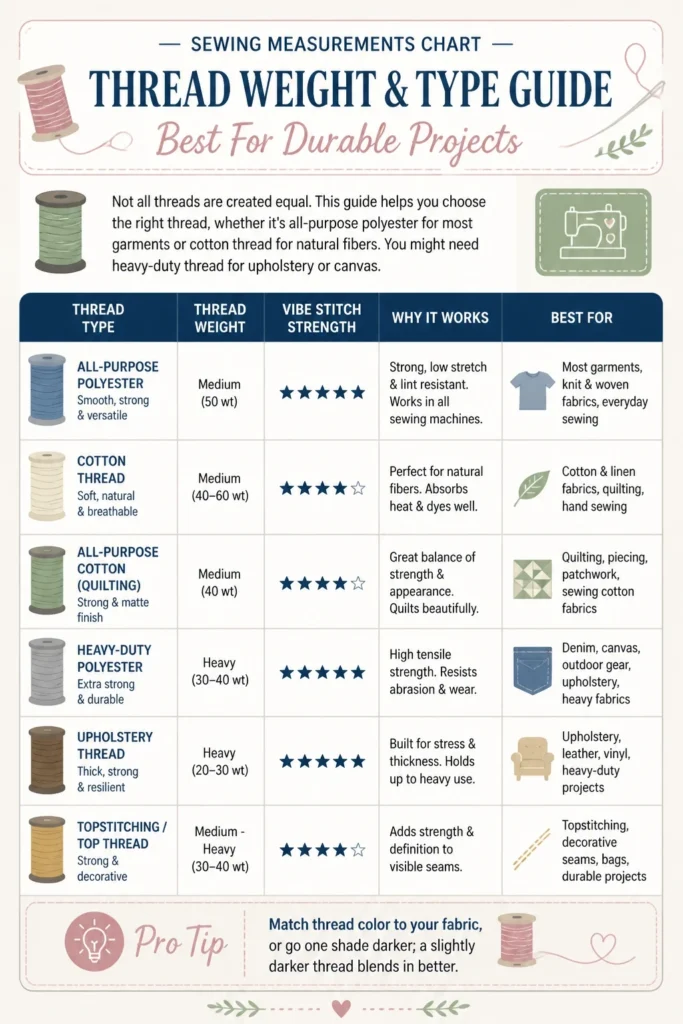
Pro Tip: Match thread color to your fabric, or go one shade darker; a slightly darker thread blends in better.
9. Hemming Allowance Chart
- Best For: Skirts, pants, sleeves
- Vibe: Polished edges
- Why it works: Gives you standard, neat allowances for various garment types, making your finishes look pro.
A good hem makes all the difference. This chart suggests ideal hem allowances, like 1 inch for sleeves or 2-3 inches for skirts and pants. Consider a double-fold hem for a super clean, enclosed finish.
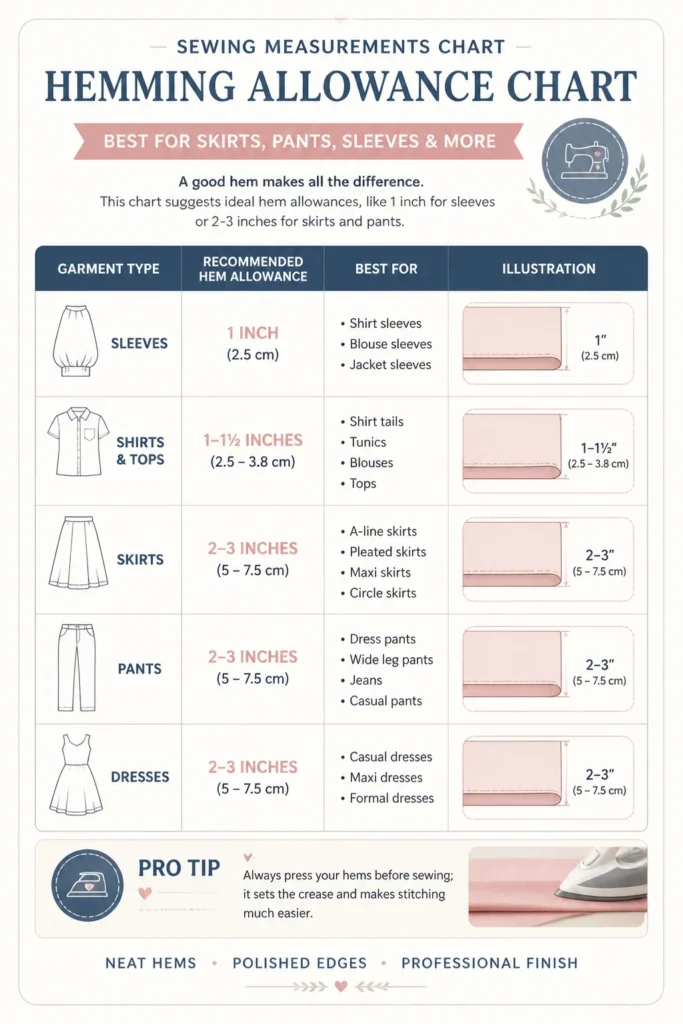
Pro Tip: Always press your hems before sewing; it sets the crease and makes stitching much easier.
10. Quilting Block Size Calculator
- Best For: Quilters
- Vibe: Patchwork precision
- Why it works: Helps you cut your fabric accurately for specific block sizes, ensuring everything lines up.
Quilting involves a lot of math, but this chart simplifies block calculations. It helps you figure out finished versus unfinished block sizes, accounting for those critical 1/4 inch seam allowances. For a 12-inch finished block, you’ll need to cut larger pieces.
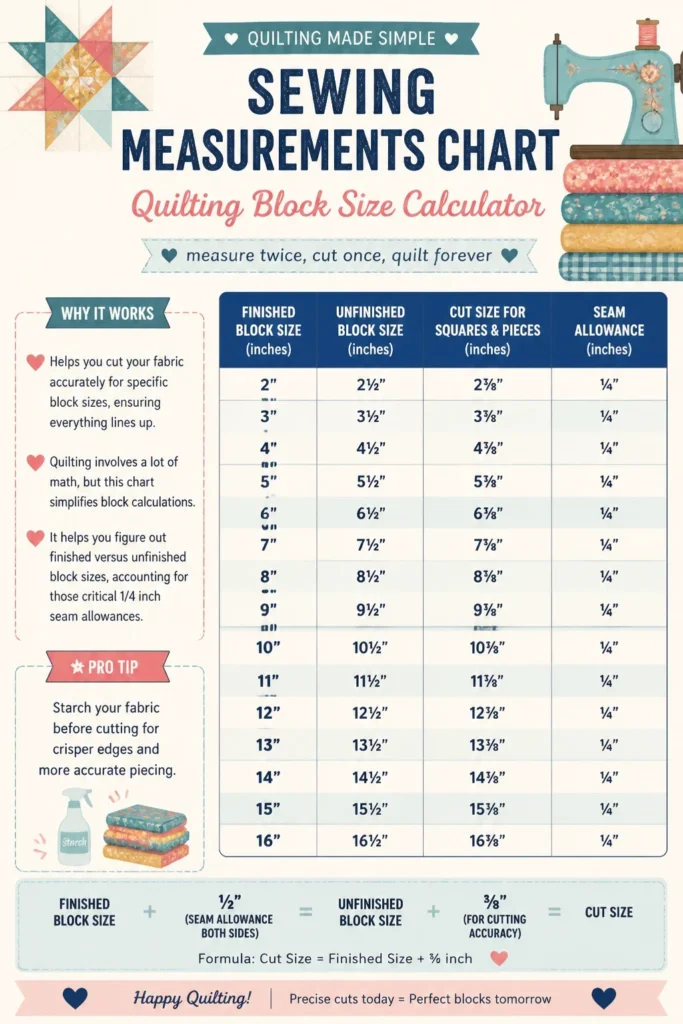
Pro Tip: Starch your fabric before cutting for crisper edges and more accurate piecing.
11. Metric to Imperial Conversion
- Best For: Global pattern enthusiasts
- Vibe: Universal understanding
- Why it works: Smoothly translates measurements between different systems, opening up a world of patterns.
Don’t let a pattern written in centimeters scare you away. This chart quickly converts inches to centimeters and yards to meters. It’s absolutely essential for tackling patterns from European or Australian designers.
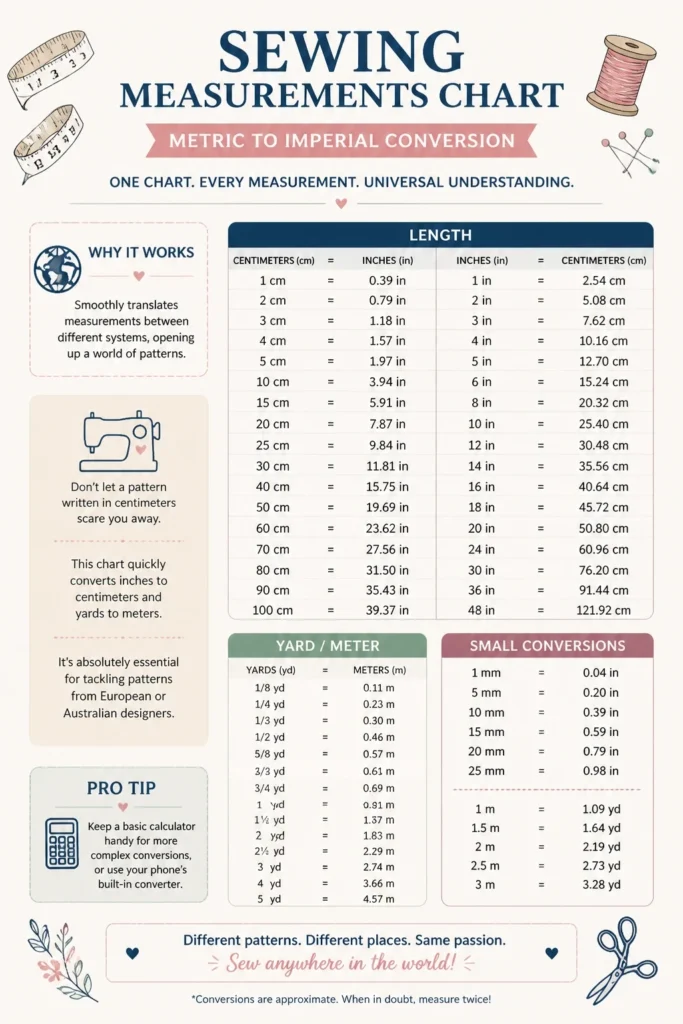
Pro Tip: Keep a basic calculator handy for more complex conversions, or use your phone’s built-in converter.
12. Elastic & Trim Usage Chart
- Best For: Waistbands, cuffs, decorative edges
- Vibe: Flexible style
- Why it works: Guides you on how much elastic or trim to use for different garment areas.
Getting the right amount of stretch is key. This chart advises on elastic lengths, noting that waistband elastic is typically 2-3 inches smaller than your actual waist. It also helps with using bias tape for curved edges.
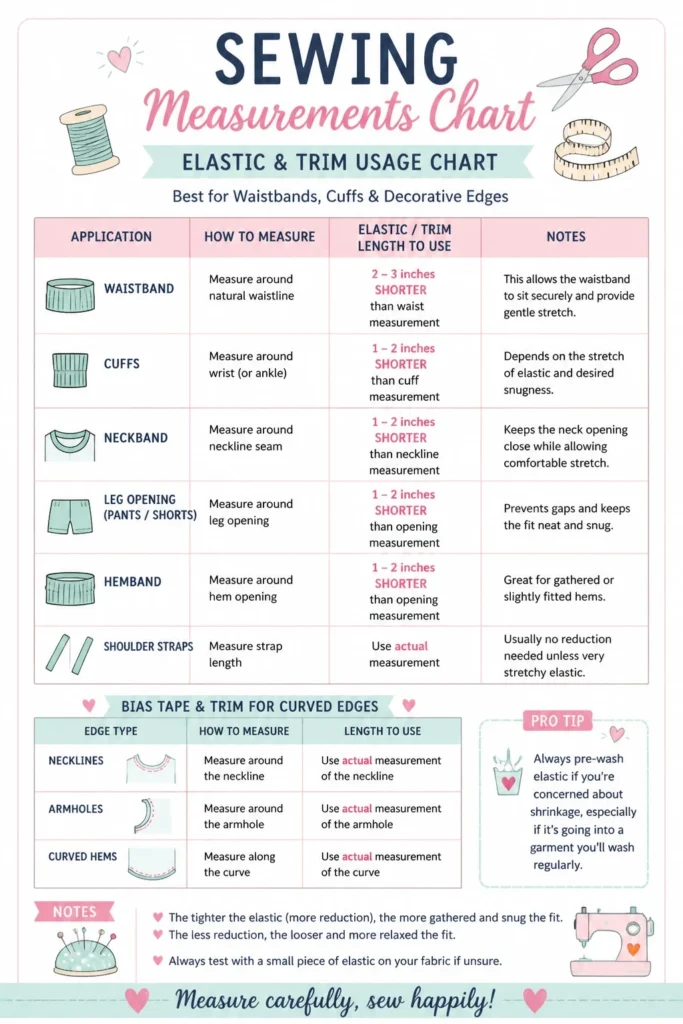
Pro Tip: Always pre-wash elastic if you’re concerned about shrinkage, especially if it’s going into a garment you’ll wash regularly.
13. Iron Temperature Guide
- Best For: Pressing seams, preparing fabric
- Vibe: Smooth operator
- Why it works: Prevents scorching and ensures proper pressing for each fabric type.
Pressing is half the battle in sewing, and the right iron temperature is crucial. This guide details settings like low heat for silk, medium for cotton, and high for linen. Always test on a scrap first.
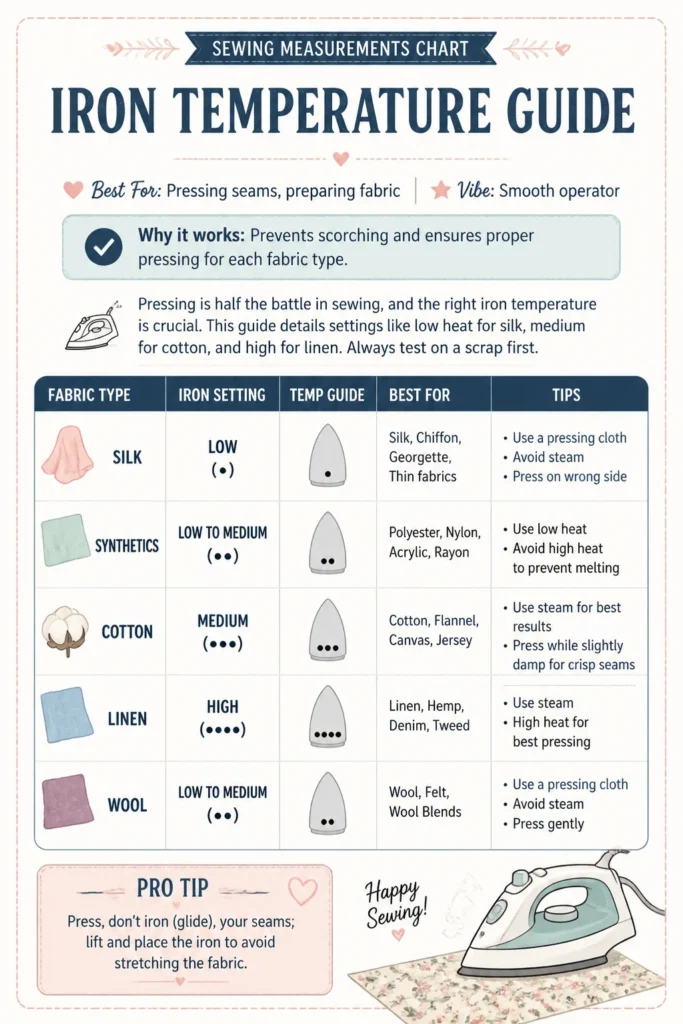
Pro Tip: Press, don’t iron (glide), your seams; lift and place the iron to avoid stretching the fabric.
14. Fabric Grainline & Stretch Reference
- Best For: Cutting out patterns correctly
- Vibe: Fabric whisperer
- Why it works: Ensures your garment hangs correctly and stretches where it should.
Understanding grainline is fundamental. This chart helps identify the warp (lengthwise grain) and weft (crosswise grain), plus the bias. It’s especially critical for knit fabrics to ensure proper drape and fit.
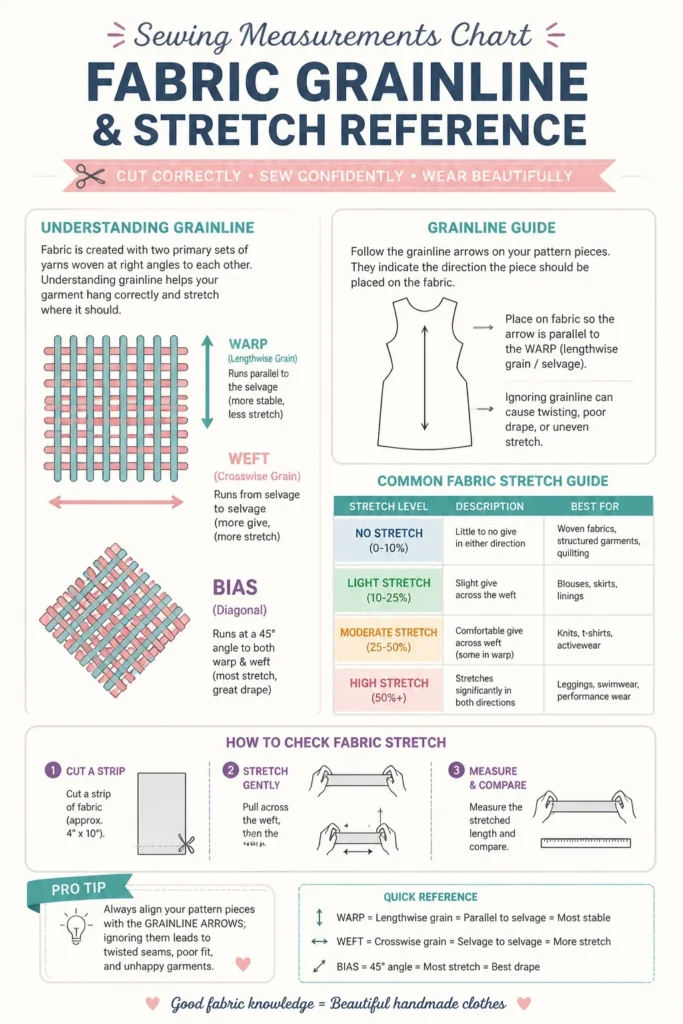
Pro Tip: Always align your pattern pieces with the grainline arrows; ignoring them leads to twisted seams.
Our Top Recommended Finds
- Retractable Tape Measure: Because fumbling with a floppy one is just extra drama you don’t need.
- Clear Quilting Ruler Set: Perfect for precise cuts and making sure your lines are actually straight.
- Fabric Marking Pens (water soluble): So you can mark your fabric without leaving permanent evidence of your measuring adventures.
Which of these will you try first?
See? No more guessing games or accidentally sewing a sleeve onto your pant leg (we’ve all been there, right?). These free printable sewing measurement charts are here to make your crafting life infinitely easier and way more accurate.
Which of these handy helpers are you printing out first for your next project? Let us know in the comments!