11 Strong Stitches For Hand Sewing
Your favorite vintage jeans just ripped at the thigh and your sewing machine is currently a glorified paperweight.
Don’t panic because you can actually fix this without a power cord.
Grab your needle and thread while we look at some ways to keep your clothes together.
1. Backstitch
- Best For: Heavy denim repairs
- Vibe: Indestructible energy
- Why it works: It creates a continuous line of overlapping thread that mimics a machine stitch.
This is the heavyweight champion of manual labor. Use heavy-duty navy thread on dark denim to make that crotch blowout a distant memory. It is the most reliable way to ensure your pants do not fail you during a squat.
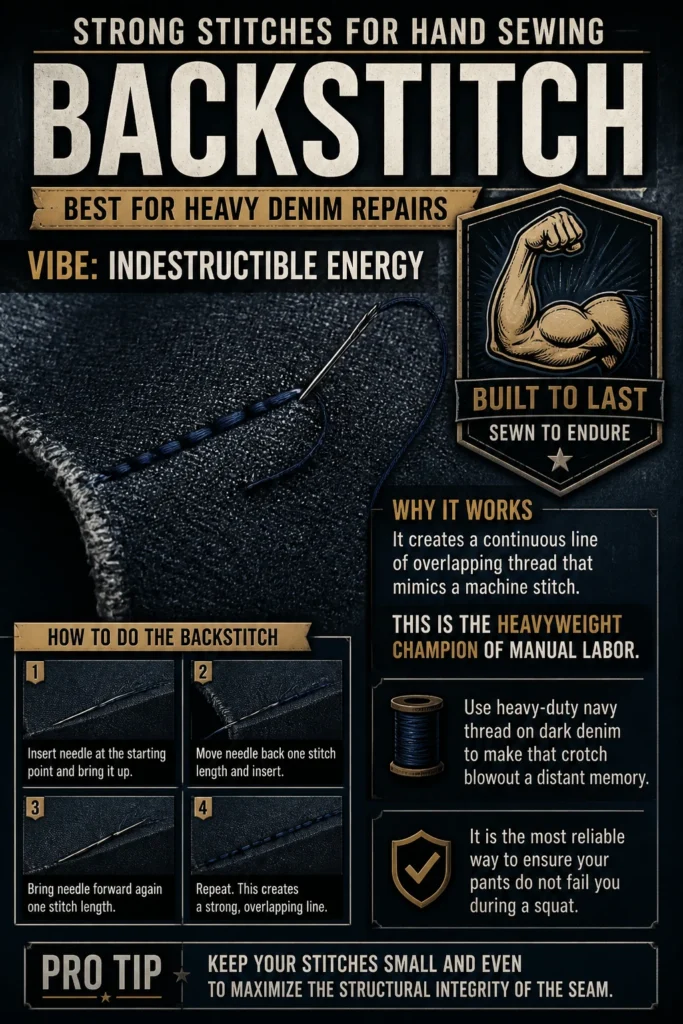
Pro Tip: Keep your stitches small and even to maximize the structural integrity of the seam.
2. Running Backstitch
- Best For: Lightweight linen shirts
- Vibe: Efficient and sneaky
- Why it works: It combines the speed of a running stitch with the strength of a backstitch.
You want to move fast but you also do not want your shirt to fall apart at brunch. Grab some all-purpose polyester thread in a matching cream shade for those linen seams. It provides a nice balance of speed and security for non-stress areas.
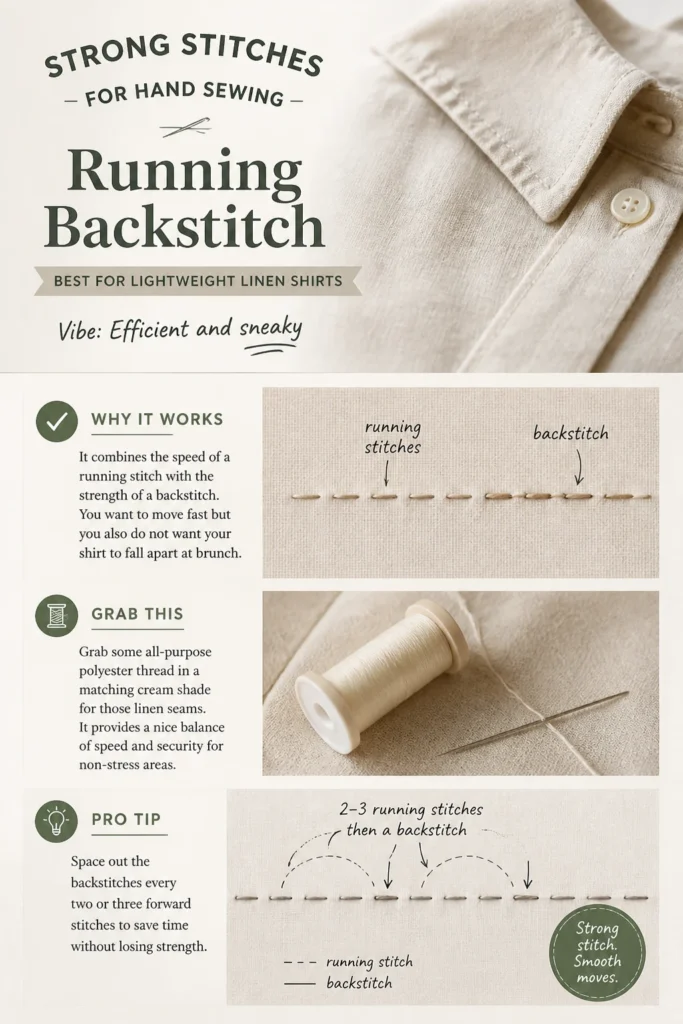
Pro Tip: Space out the backstitches every two or three forward stitches to save time without losing strength.
3. Whip Stitch
- Best For: Felt crafts and thick wool
- Vibe: Cozy cabin aesthetic
- Why it works: It wraps around the raw edges of the fabric to prevent fraying and secure layers.
Use a thick embroidery floss in a contrasting charcoal grey for a bold look on wool blankets. This stitch is incredibly easy to master even if you have zero coordination. It holds edges together like a firm handshake.
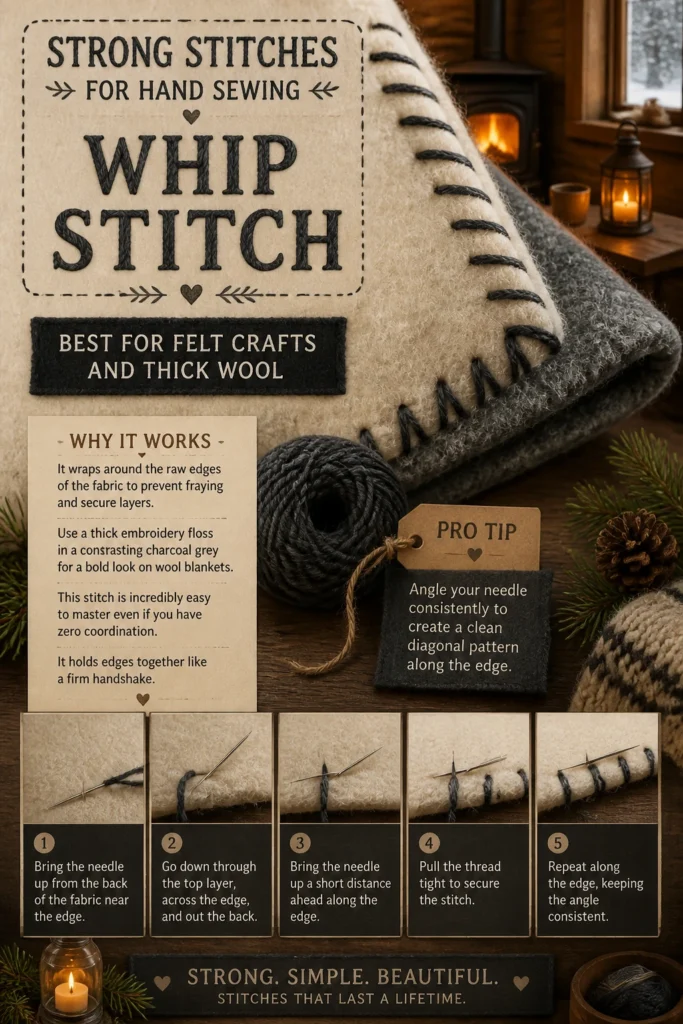
Pro Tip: Angle your needle consistently to create a clean diagonal pattern along the edge.
4. Blanket Stitch
- Best For: Decorative edging on fleece
- Vibe: High-end handmade
- Why it works: The interlocking loops create a sturdy border that looks professional and prevents unraveling.
If you are making a DIY throw, use perle cotton thread in a soft sage green. It looks intentional and expensive rather than like a desperate repair job. It adds a thick layer of protection to any exposed fabric edge.
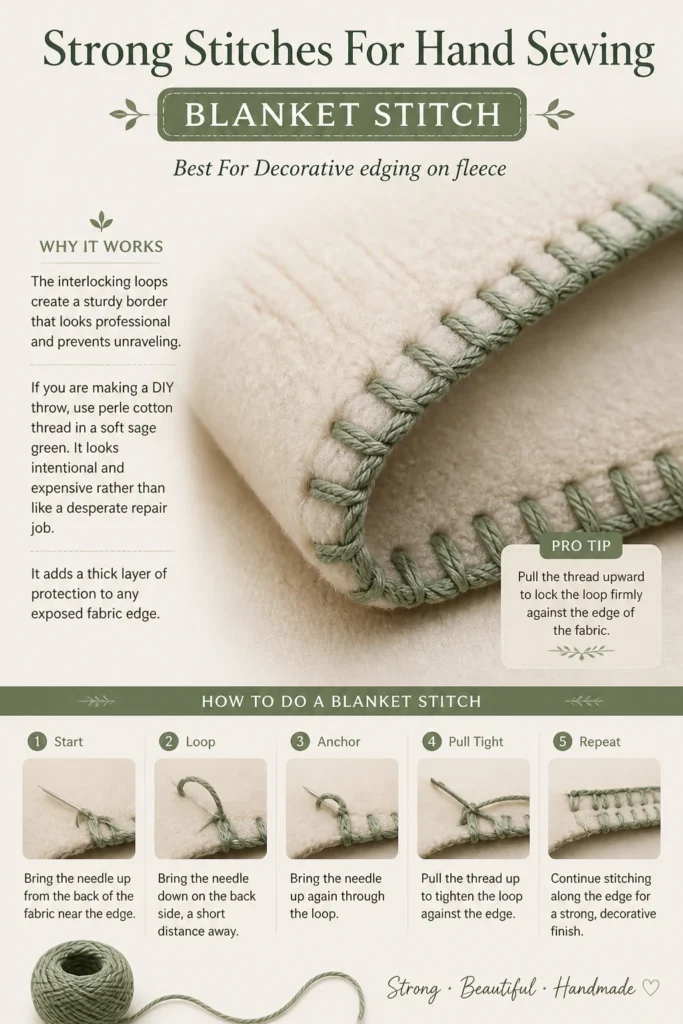
Pro Tip: Pull the thread upward to lock the loop firmly against the edge of the fabric.
5. Fell Stitch
- Best For: Tailored garment linings
- Vibe: Savile Row apprentice
- Why it works: It secures a folded edge flat against another piece of fabric with almost invisible threads.
When your silk blazer lining starts to droop, use a fine silk thread to tack it back down. This stitch is the secret to clothes that look like they cost more than your rent. It is incredibly strong despite its delicate appearance.
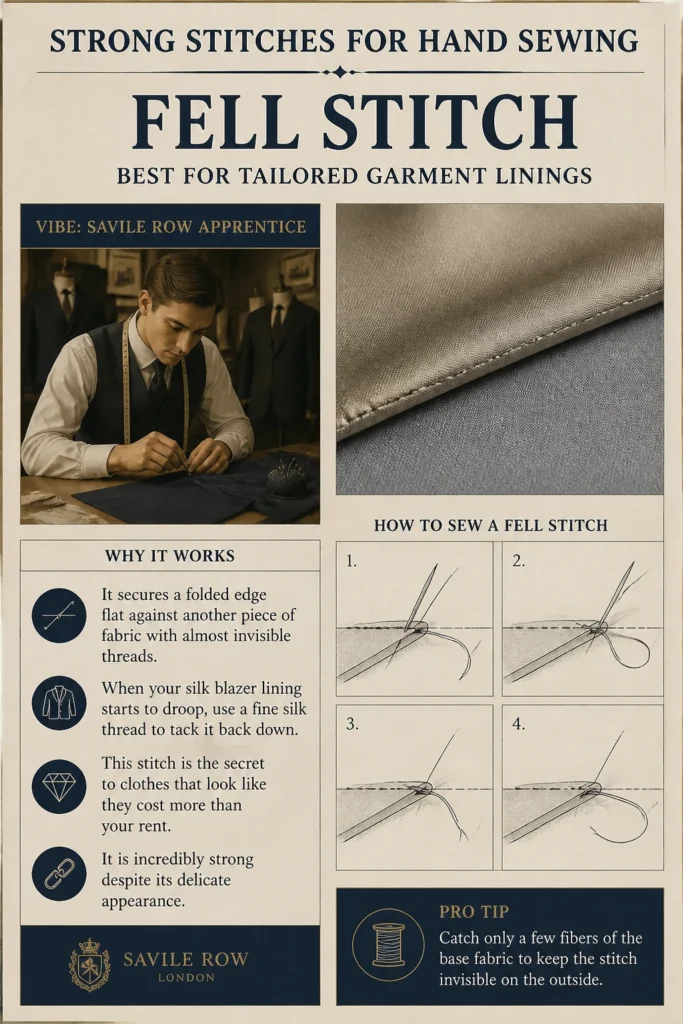
Pro Tip: Catch only a few fibers of the base fabric to keep the stitch invisible on the outside.
6. Slip Stitch
- Best For: Invisible hems on trousers
- Vibe: Stealth mode
- Why it works: The thread travels inside the fold of the fabric so it remains hidden from view.
Use this on your favorite black slacks with high-quality cotton thread. Nobody will ever know you fixed your hem in the back of a taxi. It provides a clean finish that handles the friction of walking with ease.
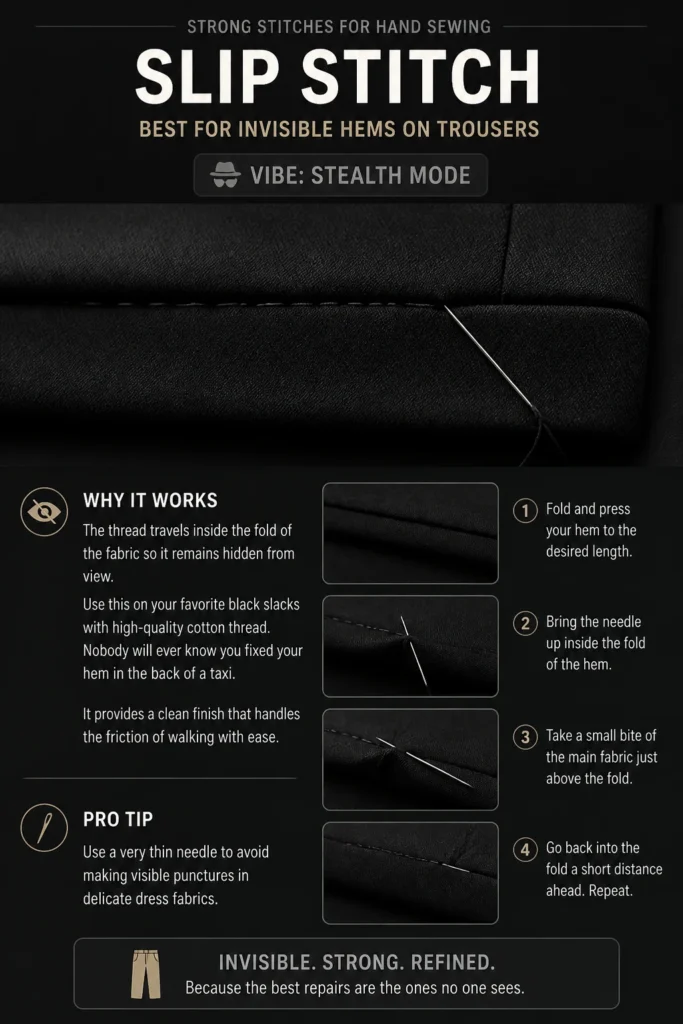
Pro Tip: Use a very thin needle to avoid making visible punctures in delicate dress fabrics.
7. Buttonhole Stitch
- Best For: High-stress button attachments
- Vibe: Utilitarian chic
- Why it works: The purl knot at the edge of the stitch creates a reinforced barrier against constant friction.
Buttons on winter coats take a beating so use waxed thread for extra durability. This stitch ensures your buttons stay attached even when you are stuffed into a crowded subway car. It is significantly tougher than the standard cross-stitch method.
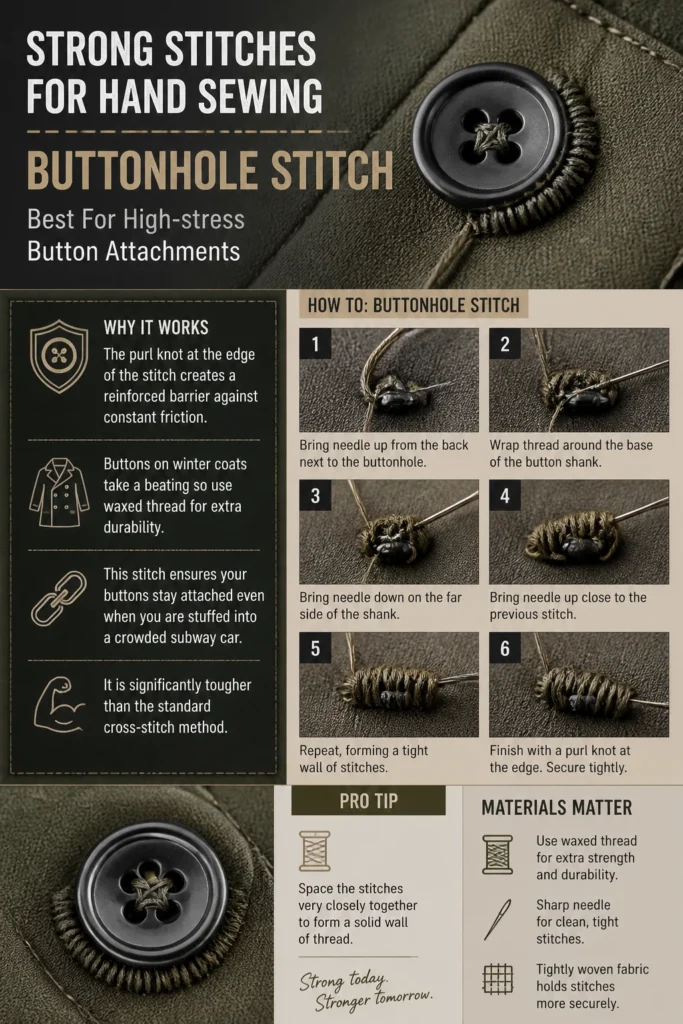
Pro Tip: Space the stitches very closely together to form a solid wall of thread.
8. STEM Stitch
- Best For: Curved seams and embroidery
- Vibe: Artistic and fluid
- Why it works: The overlapping nature of the thread allows it to follow curves while maintaining tension.
If you are repairing a curved armhole, use mercerized cotton in a vibrant primary color. It creates a rope-like texture that is surprisingly difficult to break. It adds a bit of decorative flair to a structural necessity.
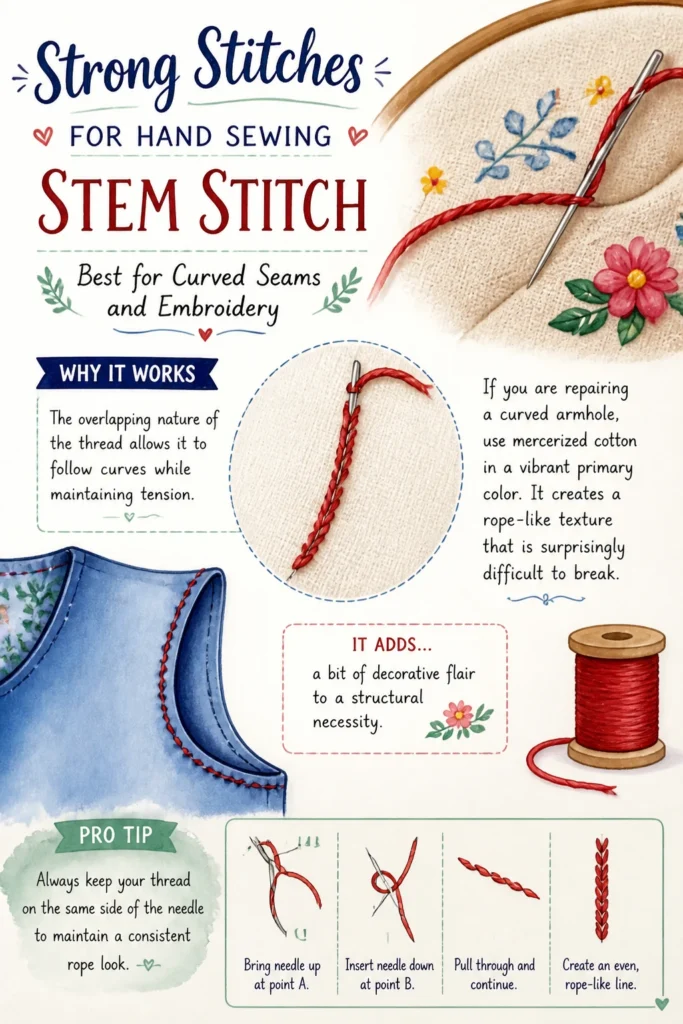
Pro Tip: Always keep your thread on the same side of the needle to maintain a consistent rope look.
9. Overcast Stitch
- Best For: Raw fabric edges
- Vibe: Neat and tidy
- Why it works: It prevents the fabric from shedding threads and weakening the main seam.
Before you even sew your pieces together, use a basic polyester thread to finish the edges. This is vital for fabrics that fray if you even look at them funny. It acts as a manual version of a serger machine.
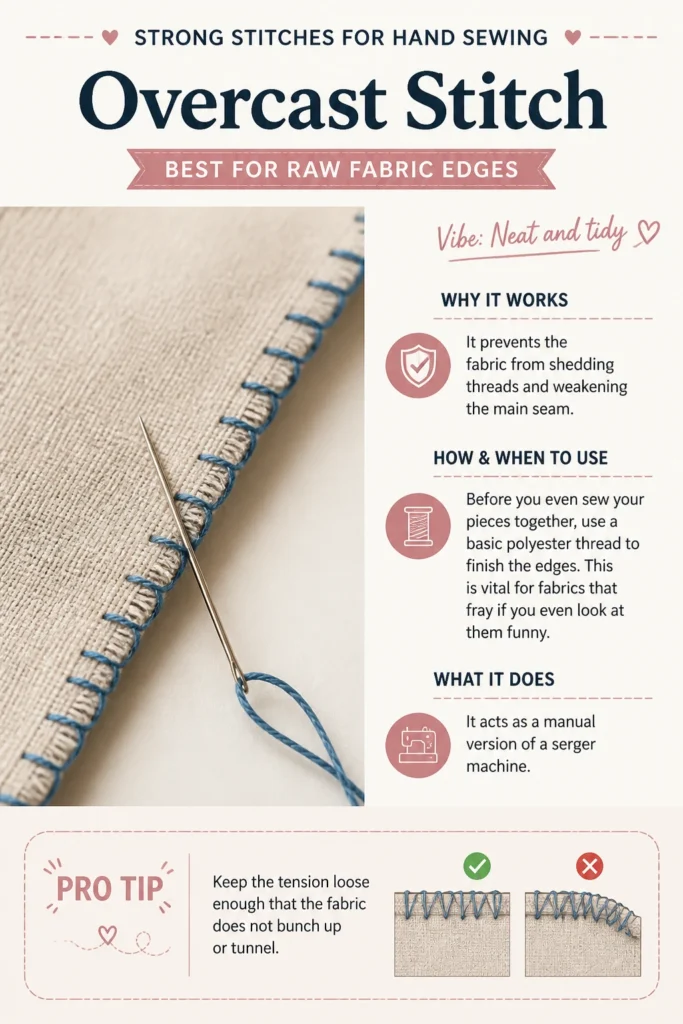
Pro Tip: Keep the tension loose enough that the fabric does not bunch up or tunnel.
10. Prick Stitch
- Best For: Zippers in heavy fabrics
- Vibe: Old-school couture
- Why it works: It is a variation of the backstitch that uses tiny surface increments for maximum grip.
Installing a zipper by hand sounds like a nightmare but this stitch makes it a breeze. Use topstitching thread in a contrasting color for a cool industrial look on a canvas bag. It holds the zipper tape securely against the heaviest materials.
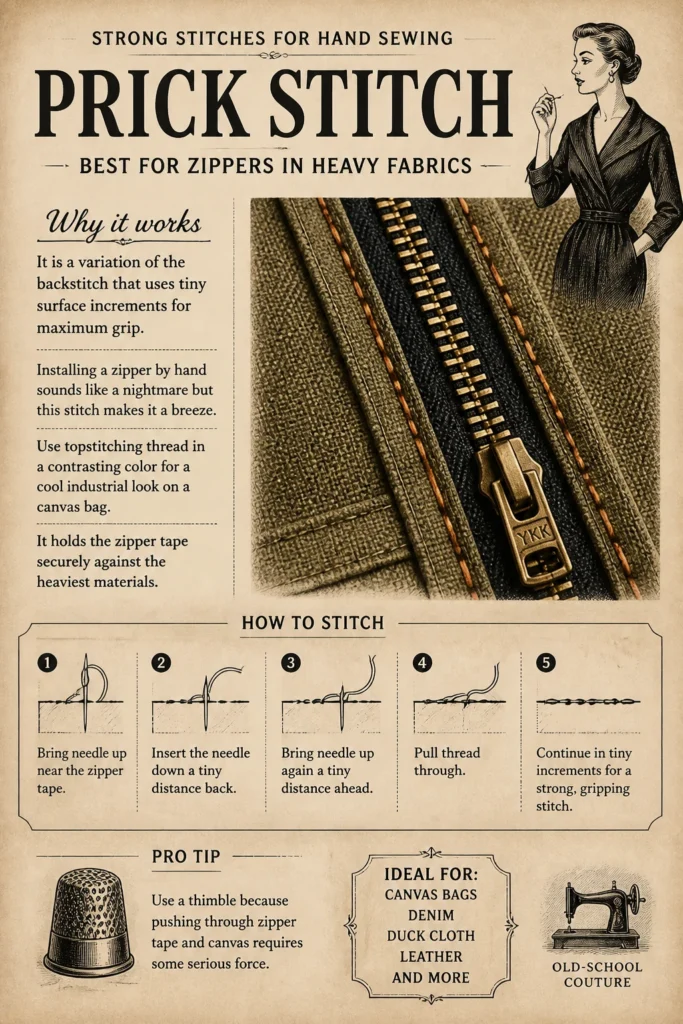
Pro Tip: Use a thimble because pushing through zipper tape and canvas requires some serious force.
11. Ladder Stitch
- Best For: Closing plush toys or pillows
- Vibe: Magic trick
- Why it works: It pulls two edges together from the inside so the seam completely disappears.
When your decorative velvet pillow springs a leak, grab some bonded nylon thread. You can sew the hole shut from the outside and then pull the thread to watch the gap vanish. It is the most satisfying way to finish a project.
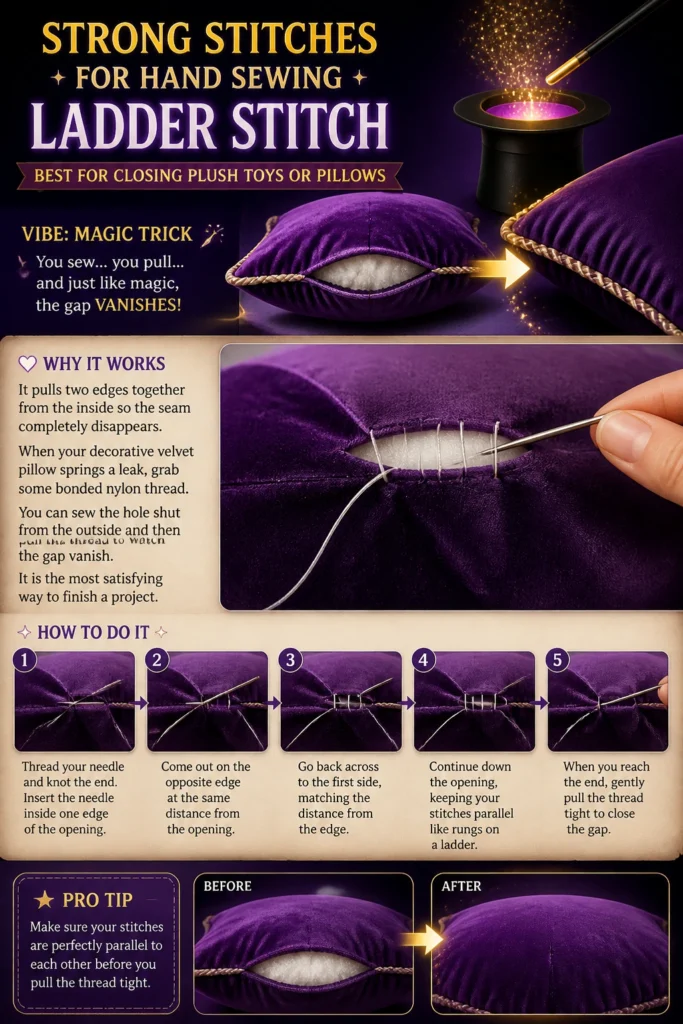
Pro Tip: Make sure your stitches are perfectly parallel to each other before you pull the thread tight.
Our Top Recommended Finds
- A set of assorted sharp needles helps you match the needle size to your fabric thickness for easier sewing.
- Beeswax thread conditioner coats your thread to prevent tangling and adds a layer of strength to every stitch.
- A metal thimble protects your fingertips when you are pushing needles through stubborn layers of denim or leather.
Which of these will you try first?
You are now officially ready to rescue your wardrobe from the landfill with these techniques.
Hand sewing is a superpower that saves money and makes your clothes last forever.
Do you have a favorite stitch that never lets you down or are you ready to try the backstitch today?